
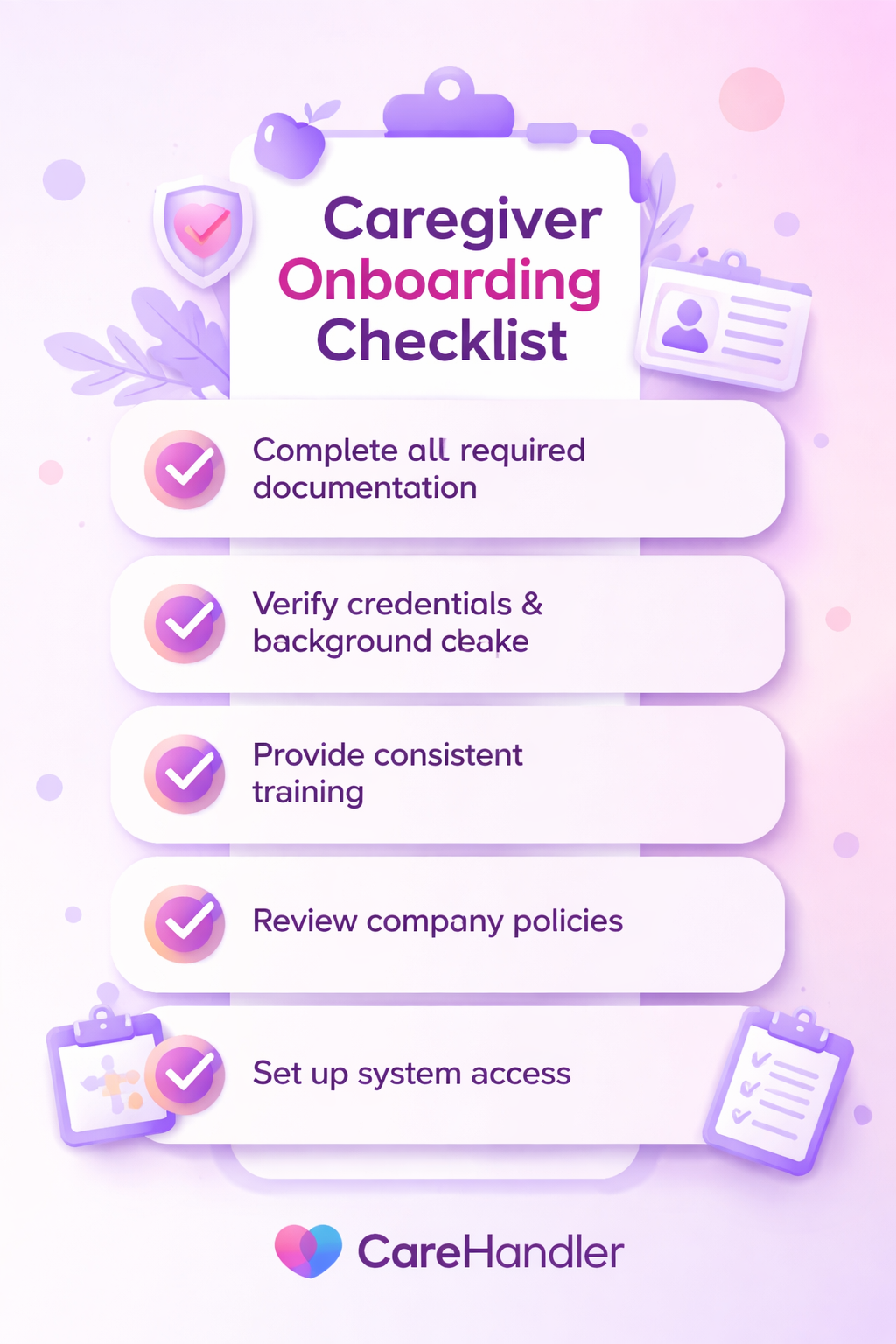
Bringing on a new caregiver is more than just filling a position—it’s a critical moment that directly impacts your agency’s compliance, client safety, and overall quality of care.
Without a structured onboarding process, important steps can be missed. Documentation gets delayed. Training becomes inconsistent. And small gaps can quickly turn into major compliance risks.
That’s why creating a standardized caregiver onboarding checklist is one of the most effective ways to protect your agency and set your team up for success.
What Is a Caregiver Onboarding Checklist?
A caregiver onboarding checklist is a step-by-step process that ensures every new hire completes all required:
- Documentation
- Training
- Credential verification
- Compliance steps
Before they begin working with clients.
Instead of relying on memory or scattered processes, a checklist creates a repeatable, accountable system.
Why Standardization Matters
When onboarding is inconsistent, agencies often run into:
- Missing or incomplete employee files
- Expired or unverified credentials
- Caregivers starting shifts before being fully cleared
- Increased audit risk
- Variability in care quality
Standardization eliminates these gaps.
Every caregiver goes through the same process, every time, ensuring nothing is overlooked.
Key Components of an Effective Onboarding Checklist
A strong onboarding checklist should cover four core areas:
1. Employment Documentation
Ensure all required paperwork is completed and stored properly:
- I-9 verification
- W-4 and state tax forms
- Direct deposit setup
- Signed policies and procedures
2. Credential Verification
Before a caregiver is scheduled, confirm:
- Licenses or certifications (if required)
- Background checks
- TB tests or health screenings
- Any state-specific compliance requirements
3. Training and Orientation
Every caregiver should receive consistent training, including:
- Agency policies and expectations
- EVV and documentation requirements
- Client care standards
- Safety protocols
4. System Access and Readiness
Before their first shift, ensure caregivers:
- Have access to your systems
- Understand how to clock in/out
- Know how to complete visit notes
- Can communicate with your administrative team
How This Impacts Compliance
From an audit perspective, onboarding is one of the first places reviewers look.
Incomplete files or missing documentation can lead to:
- Compliance violations
- Payment recoupments
- Increased scrutiny from payers
A standardized checklist creates a clear paper trail, showing that:
- Every caregiver was properly vetted
- Required documentation was completed
- Training was consistently delivered
This makes your agency audit-ready by design, not by last-minute preparation.
How This Improves Quality of Care
Beyond compliance, onboarding directly affects the care your clients receive.
When caregivers are:
- Properly trained
- Clear on expectations
- Confident using your systems
They are far more likely to:
- Deliver consistent, high-quality care
- Complete accurate documentation
- Communicate effectively with your team
Consistency at the start leads to consistency in the field.
Building Accountability Into Your Process
A checklist doesn’t just organize tasks—it creates accountability.
To make it effective:
- Assign ownership for each step
- Require sign-offs before moving forward
- Prevent scheduling until onboarding is complete
This ensures that compliance is not optional—it’s built into your workflow.
How Carehandler Supports Structured Onboarding
At Carehandler, we believe that strong operations start with strong systems.
By connecting caregiver onboarding with scheduling, documentation, and billing workflows, agencies can:
- Ensure caregivers are fully cleared before working
- Maintain complete and accessible records
- Reduce administrative errors
- Strengthen compliance across the board
When onboarding is standardized, everything that follows becomes more consistent.
Final Thoughts
A caregiver onboarding checklist may seem simple, but its impact is significant.
It protects your agency.
It supports your caregivers.
And it ensures your clients receive the level of care they deserve.
Because in homecare, consistency isn’t just operational—it’s essential.